
Today, smart design is all about saving space. At the same time, users expect comfort and automation. Because of this, pop-up counters using linear actuator are becoming very popular in homes and commercial spaces. These systems allow counters, appliances, or displays to stay hidden when not needed. Then, with one simple command, they rise smoothly into position. As a result, spaces look cleaner, smarter, and more modern.
What Are Pop-Up Counters Using Linear Actuators?
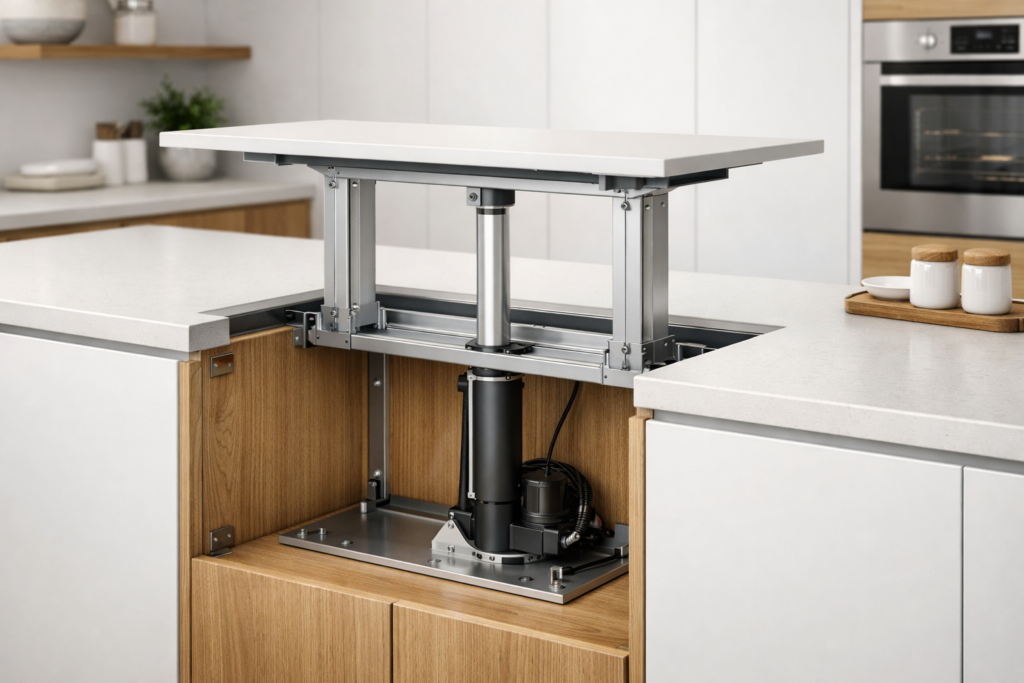
Simply put, pop-up counters are movable platforms that lift vertically. They use electric linear actuators to move up and down in a controlled way. For example, they can hide kitchen appliances, worktops, TVs, or retail displays. When required, the counter rises from inside a cabinet. When finished, it retracts back inside. Therefore, valuable surface space is saved.
Key Design Principles of Pop-Up Counter Systems
1. Vertical Lift Mechanism
First of all, every pop-up counter uses a vertical lift structure. This structure is often a wooden or metal drawer. Inside this drawer, the appliance or counter is placed. The linear actuator pushes the drawer upward. Meanwhile, it pulls the drawer down when retracting. As a result, the movement stays smooth and controlled.
2. Self-Guiding System
However, linear actuators only create motion. They do not guide the load. Because of this, the drawer itself acts as a guiding system. In other words, the cabinet walls keep the movement straight. Therefore, accurate cabinet design is very important. If aligned well, the counter moves steadily without shaking.
3. Stability and Safety
Next, stability must be considered. To prevent tilting, part of the drawer should always remain inside the cabinet. Ideally, 6 to 10 inches of the drawer stays inside the base even when fully raised. As a result, the system remains balanced and safe during operation.
4. Force and Stroke Length Selection
Equally important is choosing the right actuator. The required force depends on the weight of the counter or appliance. Meanwhile, the stroke length depends on how high the counter needs to lift. For heavier loads, high-force actuators are required. On the other hand, lighter counters can use compact models. Therefore, correct selection ensures long life and smooth movement.
Required Components for a Pop-Up Counter System
To build a reliable system, several components are needed.
Linear Actuators
For example:
- Heavy-duty actuators for bar counters or stone tops
- Compact actuators for light appliances or displays
Mounting Brackets
In addition, proper brackets are required. These securely fix the actuator to:
- The cabinet base
- The moving drawer or counter
Good mounting improves strength and reduces wear.
Power Supply
Most systems use 12V or 24V DC power supplies. Therefore, the power rating must match the actuator specifications.
Control Mechanism
Control options can be simple or advanced. For instance:
- Rocker or push-button switches
- Remote controls
- Control boxes.
As a result, the system can be customized for user comfort.
Limit Switches
Usually, actuators have built-in limit switches. These stop movement at full extension and retraction. However, external limit switches can be added. This allows custom height control and improves safety.
Common Applications of Pop-Up Counters
Kitchen Automation
Pop-up counters are widely used in kitchens. For example:
- Hidden stand mixers or blenders
- Pop-up power sockets
- Appliance lifts inside islands
As a result, the kitchen stays neat and clutter-free.
Home Office Use
In home offices, pop-up systems are also useful. They are used for:
- Sit-stand desks
- Hidden computer monitors
Therefore, workspaces look clean when not in use.
Entertainment and Lifestyle
Moreover, pop-up counters add luxury to living spaces. Common uses include:
- Hidden TV lift cabinets
- Pop-up bar or liquor counters
These features create a premium experience.
Retail and Exhibition Displays
In commercial spaces, pop-up counters are very effective. They help create:
- Height-adjustable display counters
- Hidden product demo units
As a result, staff comfort improves and customer attention increases.
Why Use Linear Actuators for Pop-Up Counters?
Linear actuators offer many benefits. First, they provide smooth and precise movement. Second, they are compact and powerful. In addition, they are easy to automate. They also operate quietly. Therefore, they are ideal for both home and commercial use.
Conclusion
Overall, pop-up counters using linear actuators are a smart solution for modern spaces. They save space, improve appearance, and add automation. By using the right actuator, stable design, and proper controls, these systems deliver reliable performance. Whether for kitchens, offices, or retail displays, pop-up counters offer both beauty and function.