
Orthopedic rehabilitation has evolved significantly with the integration of advanced motion-control technologies. One of the most critical components behind modern orthopedic therapy machines is the electric linear actuator. From Continuous Passive Motion (CPM) devices to rehabilitation chairs and robotic gait trainers, linear actuators play a central role in delivering safe, controlled, and effective therapy. In this blog, we’ll explore why orthopedic therapy machines rely on linear actuators, how they function within physical therapy equipment, and the science that makes them indispensable in rehabilitation technology.
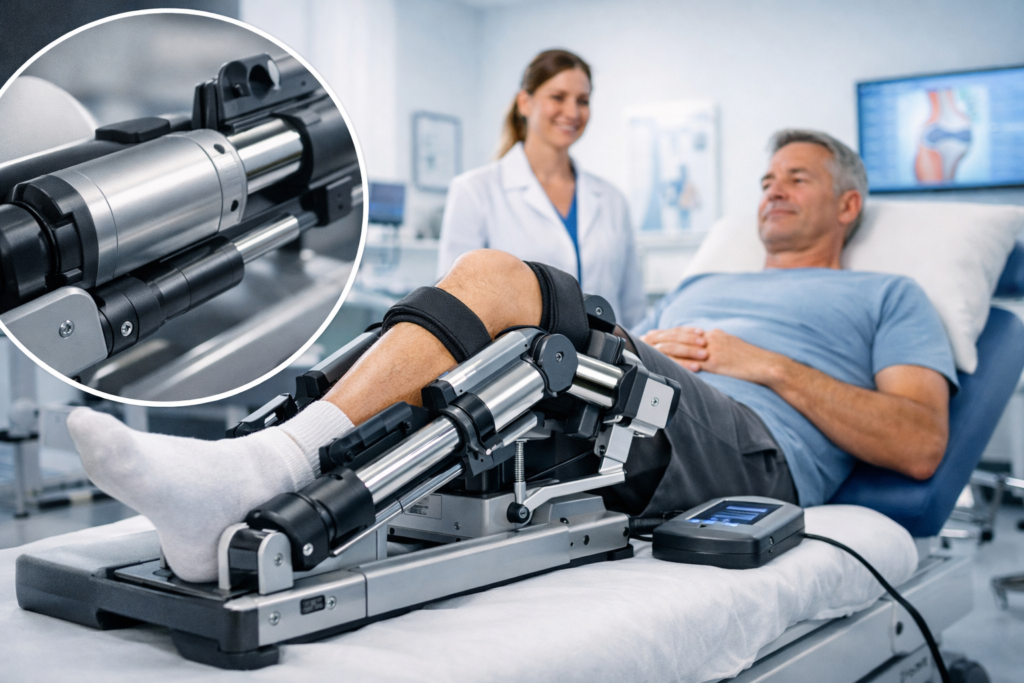
The Role of Linear Motion Systems in Physical Therapy Devices
Orthopedic therapy machines utilize electric linear actuators because they provide precise, controlled, and smooth linear motion that is essential for patient rehabilitation, safety, and comfort.
A linear actuator converts rotational motion from an electric motor into straight-line motion (push or pull movement). This controlled linear motion allows rehabilitation equipment to perform repetitive therapeutic exercises safely and efficiently.
Why Linear Actuator Are the Preferred Technology
1. Unmatched Precision and Control
Medical-grade linear actuators provide extremely accurate positioning. Therapists can set precise ranges of motion for joints, which is critical for:
- Post-surgical recovery
- Ligament injury rehabilitation
- Preventing muscle atrophy
- Gradual mobility improvement
This level of precision ensures that therapy sessions are consistent and measurable.
2. Smooth and Safe Operation
Orthopedic recovery requires gentle, gradual movement. Linear actuators:
- Deliver smooth motion without jerks
- Prevent sudden strain on healing joints
- Operate at low and safe voltages (12–24V)
This ensures patient safety and reduces discomfort during therapy sessions.
3. Quiet Performance for Comfort
Rehabilitation environments must remain calm and stress-free. Electric linear actuators operate quietly, maintaining a peaceful healthcare setting for both patients and caregivers.
4. High Load Capacity and Reliability
Orthopedic equipment must support limbs or even full body weight. Linear actuators are engineered to:
- Lift and hold significant loads
- Operate reliably over long cycles
- Require low or minimal maintenance
This durability makes them ideal for hospitals, physiotherapy centers, and home-care equipment.
5. Versatility in Equipment Design
Linear electric actuators allow automated adjustment of:
- Height
- Tilt
- Backrest angle
- Leg positioning
- Chair and table configurations
This flexibility supports personalized therapy plans.
6. Smart Integration and Data Feedback
Modern actuators integrate with smart control systems, enabling:
- Programmable therapy routines
- Custom repetition cycles
- Data monitoring and feedback
- Intelligent rehabilitation regimes
This helps therapists track patient progress and optimize recovery programs.
The Engineering Principles Behind Rehabilitation Equipment
Orthopedic therapy machines are built on biomechanical and electromechanical principles.
How It Works
- An electric motor rotates.
- A lead screw mechanism converts rotational motion into linear motion.
- The actuator shaft extends or retracts.
- Controlled movement applies safe mechanical force to the patient’s limb.
This system ensures:
- Controlled torque and speed
- Consistent repetition
- Accurate positioning
- Safe force distribution
Continuous Passive Motion (CPM) Example
CPM devices use linear electric actuators to move joints (like knees or elbows) continuously without patient effort. This promotes:
- Blood circulation
- Reduced stiffness
- Faster recovery
- Prevention of scar tissue formation
The actuator ensures the joint moves within a programmed, safe range of motion.
Comparison: Linear Actuator vs Traditional Manual Systems
| Feature | Linear Actuator-Based System | Manual / Hydraulic System |
|---|---|---|
| Motion Precision | Extremely accurate | Limited control |
| Safety | Controlled, smooth movement | Risk of jerks |
| Automation | Fully programmable | Manual adjustment |
| Noise Level | Quiet operation | Moderate to high |
| Maintenance | Low maintenance | Higher maintenance |
| Smart Integration | IoT & feedback compatible | Limited or none |
This comparison clearly shows why electric linear actuators are the modern choice for orthopedic therapy equipment.
Typical Applications in Orthopedic Therapy Machines
Linear electric actuators are widely used in:
- Electric rehabilitation chairs
- Patient lifts
- Robotic gait trainers
- CPM machines
- Adjustable therapy tables
- Post-surgical recovery devices
They assist in lifting, lowering, tilting, and positioning patients with minimal physical effort from caregivers.
Frequently Asked Questions
1. Why are linear actuator used in orthopedic therapy machines?
Because they provide precise, smooth, and controlled motion essential for safe rehabilitation exercises.
2. What is a linear actuator in medical equipment?
A linear actuator is an electromechanical device that converts motor rotation into straight-line motion for lifting, pushing, or pulling applications.
3. Are electric linear actuator safe for patients?
Yes, medical-grade actuators operate at low voltage (12–24V) and provide gradual, controlled movement.
4. How do CPM machines work?
CPM machines use linear electric actuators to move joints continuously within a preset range of motion without patient effort.
5. Can linear actuator handle heavy loads?
Yes, they are designed to support patient limbs and body weight reliably.
6. What voltage do rehabilitation actuators operate on?
Typically between 12V and 24V for safety and efficiency.
7. Do linear actuator require maintenance?
They are generally low-maintenance and built for long operational lifespans.
8. Are linear actuator quiet?
Yes, they operate quietly, making them ideal for hospitals and therapy centers.
9. Can therapy machines be automated?
Yes, actuators allow programmable and repetitive therapy cycles.
10. What are the benefits of smart actuators in rehabilitation?
They enable data tracking, customized therapy programs, and intelligent control systems.
Conclusion
Linear actuators have revolutionized orthopedic therapy machines by delivering precision, safety, and automation. Their ability to convert rotational motion into smooth linear movement ensures effective rehabilitation while maintaining patient comfort. From CPM machines to robotic gait trainers, electric linear actuators are the backbone of modern rehabilitation technology—enhancing recovery outcomes while reducing strain on healthcare professionals. As rehabilitation technology continues to evolve, smart linear electric actuator integration will further personalize and optimize orthopedic therapy solutions.
Author Bio
Kathir Sudhir Automation India
Kathir Sudhir Automation India specializes in advanced motion control systems, industrial automation solutions, and medical-grade linear actuator technologies for healthcare and rehabilitation equipment manufacturers.
With recognized industry certifications and multiple awards for innovation in automation systems, the company delivers reliable, high-performance electromechanical solutions tailored for medical and industrial applications.
🔗 LinkedIn: https://www.linkedin.com/company/kathirsudhirautomationindia/
Certifications & Recognition
- Zed Bronze Certificate
- Member at Confederation of Indian Industry (CII)
- TANSTIA Member Certificate
Follow Us
For more information on linear actuator solutions for orthopedic therapy machines, connect with our experts today. contact@kathirsudhirautomation.com