
Cooling system are critical for maintaining equipment efficiency, reducing downtime, and ensuring stable operating temperatures in industrial environments. What many industries don’t realize is that electric linear actuators play a vital role in controlling airflow, dampers, louvers, and cooling components with precision and reliability.
By automating cooling system movements, electric actuators help industries achieve better temperature regulation, energy savings, and improved operational performance. This article explains how electric actuators are used in cooling systems, their benefits, applications, and best practices.
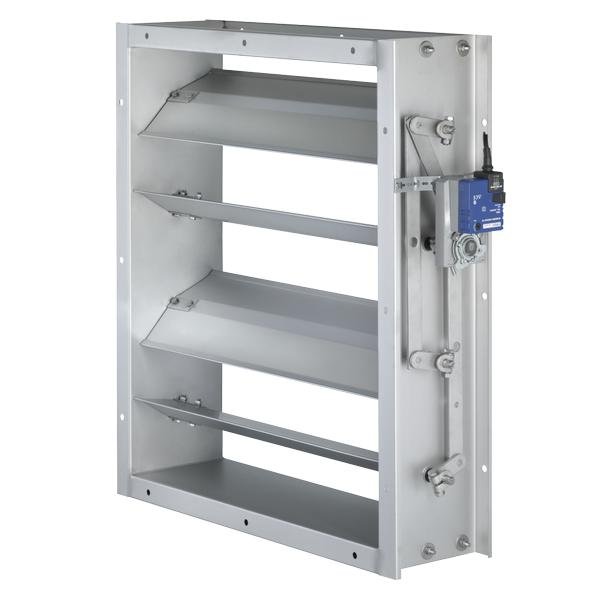
Overview of Electric Actuators in Cooling Systems
An electric linear actuator converts electrical energy into linear motion. In cooling systems, actuators are installed between the cooling unit frame and adjustable components such as:
- Louvers
- Dampers
- Air vents
- Cooling panels
- Misting assemblies
- Airflow control gates
The actuator automatically adjusts the position of these components to regulate airflow and cooling coverage.
Key Aspects
✔ Automated airflow management
✔ Precise positioning control
✔ Energy-efficient operation
✔ Reduced manual intervention
✔ Improved cooling effectiveness
✔ Easy integration with control systems
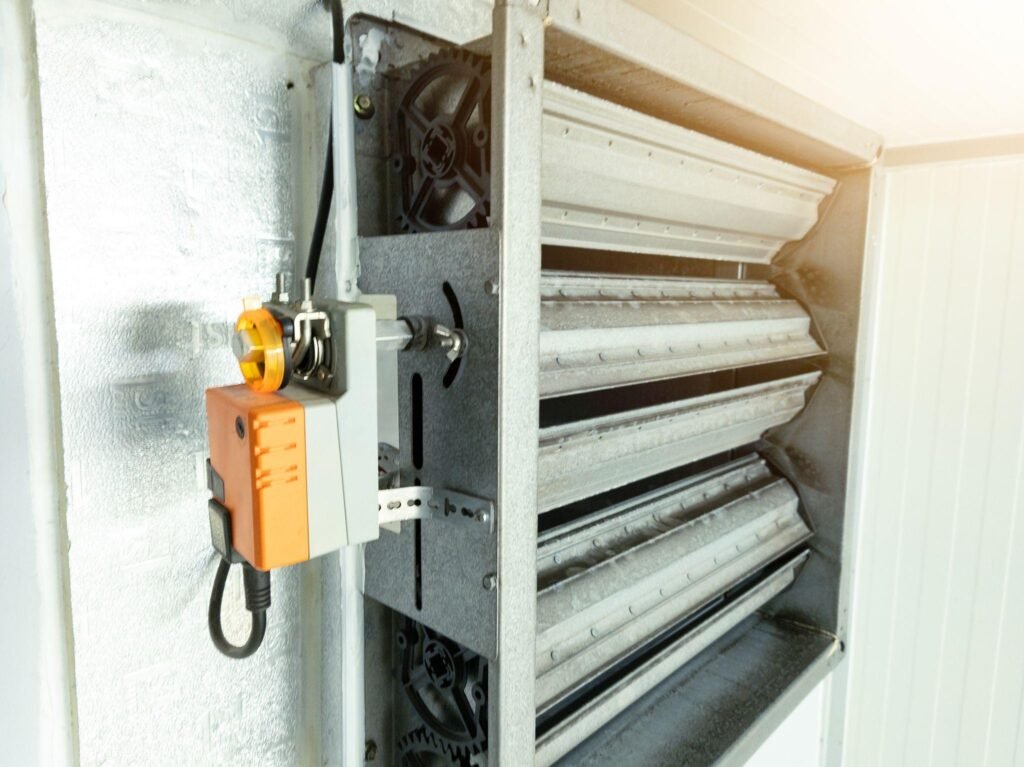
How Electric Actuators Work in Cooling Systems
Step-by-Step Working Process
- Temperature sensors monitor environmental conditions.
- Control unit receives temperature data.
- System determines whether cooling adjustment is required.
- Electrical signal is sent to the actuator.
- Actuator extends or retracts.
- Louvers, dampers, or cooling panels adjust position.
- Airflow increases or decreases accordingly.
- Desired temperature is maintained automatically.
Example
If warehouse temperature rises above a preset limit:
- Sensor detects temperature increase.
- Controller activates actuator.
- Damper opens wider.
- Airflow increases.
- Temperature returns to normal range.
Required Components
A complete cooling automation system typically includes:
| Component | Purpose |
|---|---|
| Electric Linear Actuator | Movement of cooling elements |
| Controller/PLC | Automation control |
| Temperature Sensor | Detects heat variations |
| Power Supply | Provides operating voltage |
| Limit Switches | Position monitoring |
| Mounting Brackets | Installation support |
| Cooling Unit | Provides cooling airflow |
Operations and Functions
Electric actuators perform several critical functions within cooling systems.
Primary Functions
- Raise cooling panels
- Lower cooling panels
- Open ventilation dampers
- Close ventilation dampers
- Adjust cooling coverage
- Regulate airflow direction
- Operate misting systems
- Control cooling intensity
Secondary Functions
- Emergency ventilation opening
- Automated seasonal adjustments
- Remote operation
- Scheduled cooling management
Key Application Areas and Reasons
1. Industrial Cooling Systems
Reason: Maintain machine temperatures and improve equipment life.
2. HVAC Systems
Reason: Optimize airflow distribution and energy efficiency.
3. Data Centers
Reason: Protect servers from overheating.
4. Warehouses
Reason: Maintain storage conditions and employee comfort.
5. Manufacturing Plants
Reason: Improve production environment stability.
6. Agricultural Facilities
Reason: Control greenhouse and livestock temperatures.
Comparison Table: Electric Actuator vs Manual Adjustment
| Feature | Electric Actuator | Manual System |
|---|---|---|
| Accuracy | High | Low |
| Automation | Yes | No |
| Energy Optimization | Excellent | Limited |
| Labor Requirement | Minimal | High |
| Remote Operation | Available | Not Available |
| Response Time | Fast | Slow |
| Reliability | High | Moderate |
| Maintenance | Low | Moderate |
Key Benefits and Specifications
Benefits
- Accurate airflow regulation
- Reduced energy consumption
- Enhanced cooling efficiency
- Improved worker comfort
- Extended equipment lifespan
- Lower operational costs
- Consistent temperature control
Typical Specifications
| Parameter | Range |
|---|---|
| Stroke Length | 50 mm – 1000 mm |
| Voltage | 12V, 24V, 48V, 230V AC |
| Load Capacity | 100N – 10,000N+ |
| Speed | 5 mm/s – 100 mm/s |
| Protection Class | IP54 – IP66 |
| Control Options | PLC, Remote, Switch |
Key Features
Modern Electric Actuator Features
- Integrated limit switches
- Position feedback systems
- IP-rated protection
- Compact design
- Overload protection
- Quiet operation
- Maintenance-free drive systems
- Smart control integration
Technology Trends in Cooling System Automation
Smart Monitoring
Real-time monitoring through sensors and IoT devices.
Predictive Maintenance
Data analytics predict component wear before failures occur.
Energy Optimization
Automatic adjustment based on environmental conditions.
Industry 4.0 Integration
Actuators connected to centralized plant management systems.
Remote Access
Monitoring and control through cloud platforms.
Advantages and Disadvantages
Advantages
✔ High positioning accuracy
✔ Energy efficient
✔ Environment friendly
✔ Reduced manpower requirements
✔ Easy integration with automation systems
✔ Long service life
Disadvantages
✖ Higher initial investment
✖ Requires electrical power supply
✖ Control system setup needed
✖ Sensor dependency for automation
Steps to Follow for Installation
Step 1
Analyze cooling system requirements.
Step 2
Select appropriate actuator force and stroke length.
Step 3
Install mounting brackets securely.
Step 4
Connect actuator to cooling component.
Step 5
Integrate with controller and sensors.
Step 6
Configure operating limits.
Step 7
Test complete system operation.
Step 8
Perform routine inspection and maintenance.
Installation Checklist
Before Installation
- Verify actuator specifications
- Confirm mounting dimensions
- Check power availability
- Inspect cooling equipment
During Installation
- Secure mounting brackets
- Verify alignment
- Test extension and retraction
- Confirm wiring connections
After Installation
- Test automatic operation
- Verify sensor communication
- Check safety settings
- Document maintenance schedule
Key Prevention Techniques
To maximize actuator life:
- Avoid overloading
- Protect from excessive moisture
- Inspect wiring periodically
- Clean moving components
- Verify mounting tightness
- Monitor operating temperatures
- Follow manufacturer maintenance recommendations
Compliance and Best Practices
Recommended Best Practices
- Use IP-rated actuators for harsh environments
- Follow electrical safety standards
- Implement emergency stop functions
- Maintain proper cable management
- Conduct periodic inspections
- Calibrate sensors regularly
Compliance Considerations
- Industrial electrical standards
- Machinery safety regulations
- HVAC efficiency guidelines
- Environmental protection requirements
Pro Tip
When selecting an actuator for cooling systems, always choose a unit with at least 20–30% higher load capacity than the calculated requirement. This ensures reliable operation during peak environmental conditions and extends actuator service life.
Real-World Example
A large warehouse installed electric actuators to automate roof ventilation louvers.
Results Achieved
- 25% improvement in airflow distribution
- Reduced manual adjustments
- Better temperature consistency
- Lower energy costs
- Improved employee comfort
Related Resources
For more information about electric actuator applications, explore:
- Electric Actuator Applications
- Industrial Automation Solutions
- Linear Actuator Selection Guide
- Electric Linear Actuator Systems
- Automation Control Solutions
Conclusion
Electric linear actuators have become an essential component in modern cooling systems, enabling precise control of airflow, dampers, louvers, and cooling coverage. Whether used in industrial plants, HVAC systems, data centers, or warehouses, these actuators improve efficiency, reduce energy consumption, and enhance overall system reliability. As automation and smart monitoring technologies continue to advance, electric actuators will play an even greater role in creating intelligent and energy-efficient cooling solutions.
People Also Ask (FAQ)
1. What is an electric actuator used for in cooling systems?
Electric actuators automate the movement of dampers, louvers, vents, and cooling panels to regulate airflow and maintain desired temperatures.
2. How does a linear actuator improve cooling efficiency?
It provides precise positioning control, ensuring optimal airflow distribution and reducing energy waste.
3. Can electric actuators be used in HVAC systems?
Yes. They are widely used in HVAC applications for controlling dampers, ventilation systems, and airflow management.
4. Are electric actuators suitable for data centers?
Yes. Electric actuators help maintain proper cooling airflow, protecting servers and networking equipment from overheating.
5. What voltage options are available for cooling system actuators?
Common options include 12V DC, 24V DC, 48V DC, and 230V AC.
6. What factors should be considered when selecting an actuator?
Key considerations include load capacity, stroke length, speed, voltage, environmental conditions, and duty cycle.
7. How often should cooling system actuators be maintained?
Routine inspections every 3–6 months are generally recommended, depending on operating conditions.
8. Can actuators be controlled remotely?
Yes. Many modern actuators support PLC, SCADA, remote control, and IoT-based monitoring systems.
9. What industries commonly use cooling system actuators?
Industries include manufacturing, HVAC, warehousing, agriculture, pharmaceuticals, and data centers.
10. What is the biggest advantage of using electric actuators instead of manual adjustment?
The biggest advantage is automated, precise, and energy-efficient control that improves system performance while reducing labor requirements.