
Moving heavy equipment on stairs is risky and tiring. Because of this, many industries now use climbing dollies. These machines reduce effort, improve safety, and speed up work. At the same time, linear actuator make this smart movement possible. In this blog, you will learn what a climbing dolly is, how a linear actuator works inside it, and why linear electric actuators matter in modern material handling.
What Is a Climbing Dolly?
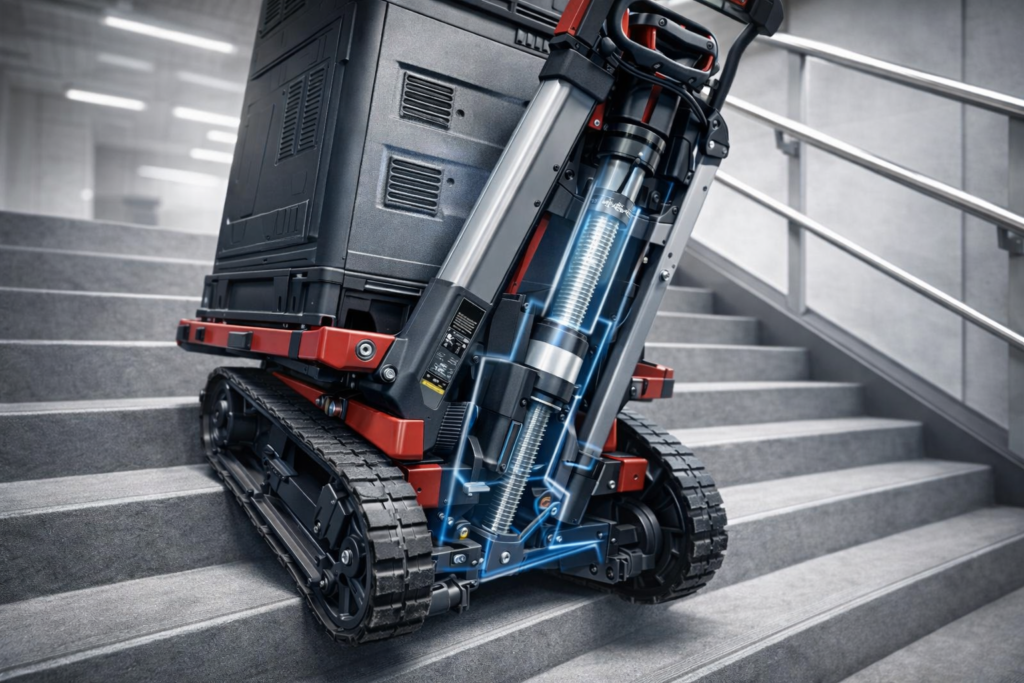
A climbing dolly is a motor-powered trolley that moves heavy loads up and down stairs. Unlike normal hand trucks, it does not rely only on human strength. Instead, it uses motors and control systems to move loads safely.
As a result, workers can move items like refrigerators, vending machines, medical equipment, and industrial tools with less risk and less effort.
Main Types of Climbing Dollies
Tracked Stair Climbers
These dollies use rubber tracks to grip stair edges. Because of this strong grip, they stay stable even with very heavy loads. In fact, some models can carry up to 1000 kg.
Stair-Walker Climbers
These models use moving arms or feet to step upward. In this case, linear electric actuators create the lifting action that moves the dolly from one step to the next.
Key Features of a Climbing Dolly
- Electric motor with rechargeable battery
- Linear actuator for lifting or leveling
- Safety brake and anti-roll system
- Adjustable platform and load straps
Why Linear Actuator Are Important in Climbing Dollies
Linear actuators play a key role in climbing dollies. In simple terms, they change motor rotation into straight push or pull movement. This motion lifts, tilts, or adjusts the load. Because stair movement needs control and balance, linear actuators provide smooth and steady motion at every step.
How Linear Actuator Work in a Climbing Dolly
Most climbing dollies use linear electric actuators. These units include a motor, gearbox, lead screw, and moving rod.
Step-by-Step Stair-Climbing Motion
First, the operator presses a control button. Next, the actuator extends a footplate. Then, this movement lifts the dolly and the load to the next stair. After that, the actuator pulls back and prepares for the next step.
As a result, the dolly climbs smoothly without sudden drops or shocks.
Load Leveling and Angle Control
Many advanced dollies also use linear electric actuators to adjust the load angle. Because of this, items stay upright even when the dolly tilts on stairs. Therefore, the risk of load slipping or falling becomes much lower.
How Does a Linear Actuator Work?
A linear actuator turns electrical power into straight-line movement. First, battery power runs a DC motor. Then, the motor turns a lead screw through gears. Next, a fixed nut moves along the screw. As a result, the rod extends or retracts.
In addition, built-in limit switches stop the movement at safe positions. This prevents damage and improves reliability.
Types of Linear Actuators Used in Dollies
Manufacturers choose actuators based on load and control needs. For example:
- Electric linear actuators: Clean, quiet, and easy to control
- Hydraulic linear actuators: Strong and suitable for very heavy loads
- Pneumatic linear actuators: Fast but less precise
However, linear electric actuators are used most often because they need less maintenance and offer better control.
Does a Linear Actuator Need a Motor?
Yes, it does. In electric actuators, a DC motor drives the internal screw. In climbing dollies, rechargeable batteries supply this power. Because of this, the system stays portable and easy to use.
How Do You Control an Electric Linear Actuator?
Operators control linear electric actuators using simple tools. For example:
- Push-button hand controls
- Joysticks
- Built-in control panels
- Wired or wireless remotes
Therefore, the operator can control speed, height, and angle with accuracy.
Can Electric Linear Actuators Be Customized?
Yes, they can. In fact, manufacturers often customize actuators for climbing dollies. Options include:
- Stroke length
- Load rating
- Speed
- Mounting style
- Voltage and feedback sensors
Because of this flexibility, designers can match the actuator to exact application needs.
Benefits of Using Linear Actuators in Climbing Dollies
- Lower physical effort: The actuator handles heavy lifting
- Higher load capacity: One person can move very heavy items
- Smooth motion: Controlled movement protects the load
- Better safety: Stable leveling reduces tipping risks
Have More Questions About Electric Linear Actuators?
Linear electric actuators make stair-climbing equipment safer and smarter. If you plan to design or upgrade a climbing dolly, choosing the right actuator is essential. In conclusion, understanding how climbing dollies and linear electric actuators work together helps create efficient, safe, and reliable material-handling solutions.