
As the global demand for renewable energy increases, solar power systems are evolving beyond traditional fixed-panel installations. One of the most efficient innovations in solar technology is the Dual Axis Solar Tracking System — especially when powered by advanced electric actuators.
Let’s explore how dual-axis tracking works and why electric actuators are the smartest choice for modern solar automation.
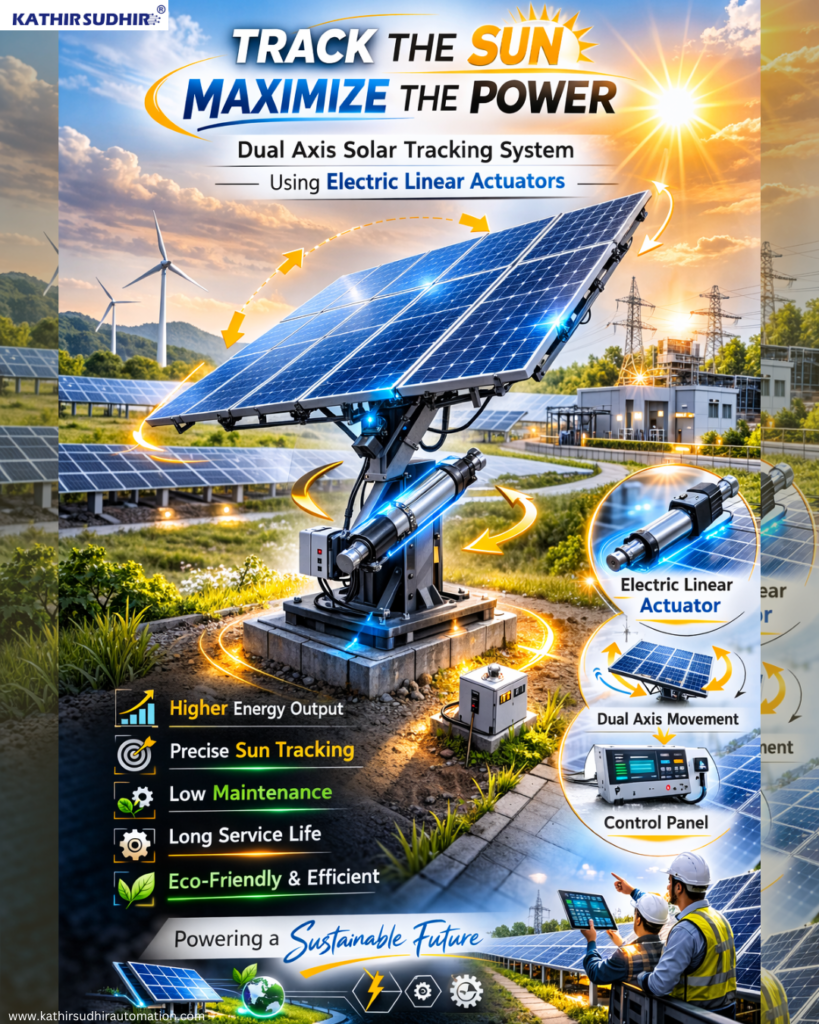
What is a Dual Axis Solar Tracking System?
A dual-axis solar tracker is a system that moves solar panels in two directions:
- Horizontal Axis (Azimuth) – Tracks the sun from east to west
- Vertical Axis (Elevation) – Adjusts tilt angle based on the sun’s height
Unlike fixed solar panels, dual-axis systems follow the sun throughout the day and across seasons, ensuring maximum solar exposure at all times.
This technology significantly improves solar energy harvesting efficiency compared to static systems.
Why Use Electric Actuators in Solar Tracking?
Electric actuators are replacing hydraulic and pneumatic systems in modern solar tracking due to their precision, reliability, and low maintenance requirements.
Key Advantages:
1️⃣ High Precision Positioning
Electric actuators provide accurate and repeatable movement, ensuring panels are aligned perfectly with the sun’s position.
2️⃣ Energy Efficient Operation
Unlike hydraulic systems that require constant pressure, electric actuators consume power only during movement.
3️⃣ Low Maintenance
No oil leakage, no complex piping, and fewer moving components — making them ideal for remote solar farms.
4️⃣ Easy Integration with Control Systems
Electric actuators can be integrated with:
- PLC systems
- Solar tracking controllers
- IoT-based monitoring platforms
5️⃣ Weather Resistance
Industrial-grade electric actuators are designed to withstand harsh outdoor conditions including wind loads, dust, and rain.
How the System Works
A typical dual-axis solar tracking system using electric actuators consists of:
- Solar panels mounted on a movable structure
- Two electric actuators (one for each axis)
- Sun position sensors or astronomical algorithm-based controller
- Control panel with feedback system
The controller calculates the sun’s position and sends signals to the actuators. The actuators adjust the panel angle accordingly throughout the day.
Performance Benefits
Compared to fixed solar panels, dual-axis tracking systems can:
- Increase energy output by 30% to 40%
- Improve ROI of solar installations
- Reduce cost per unit of energy generated
- Maximize performance in utility-scale solar plants
This makes them ideal for:
- Solar farms
- Industrial rooftops
- Agricultural solar applications
- Government renewable energy projects
Why Electric Actuators are the Future of Solar Automation
With the global shift toward clean energy and smart infrastructure, electric actuator-driven tracking systems are becoming the preferred solution.
They offer:
- Sustainable operation
- Digital control compatibility
- Long operational lifespan
- Reduced environmental impact
In large-scale installations, reliability and precision directly impact energy output — and electric actuators deliver both.
Conclusion
Dual Axis Solar Tracking Systems powered by electric actuators represent the next step in solar efficiency and intelligent automation. By enabling panels to follow the sun’s path with precision and reliability, these systems significantly enhance energy generation and long-term returns.
As solar technology continues to advance, integrating electric actuator-based automation will play a critical role in building smarter, greener energy solutions.