
Ethylene Oxide (EtO) sterilization is common in medical use. In simple words, it is used when heat is not safe. Because of this, ETO cartridge autoclaves are widely used. At the same time, electric actuator are very important. In fact, they move doors and valves. As a result, the process becomes safe and automatic.
What Is an ETO Cartridge Autoclave?
An ETO cartridge autoclave uses single-use EtO cartridges. Therefore, large gas tanks are not needed. Because of this, handling gas is easier.
In addition, electric actuators help daily work. For example, they allow:
- Safe door closing
- Smooth gas release
- Correct valve movement
As a result, leakage risk stays low.
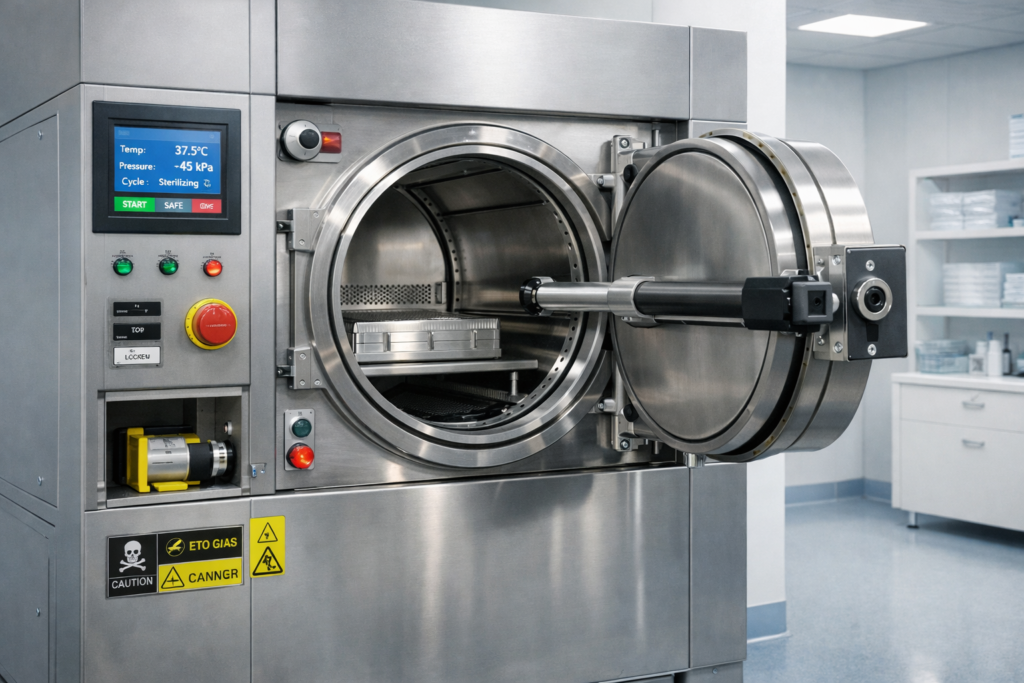
How an Electric Actuator Works on an ETO Cartridge
Electric actuators change power into motion. In other words, they push or pull parts.
In ETO autoclaves, this motion repeats often. Therefore, smooth and stable movement is needed.
How It Works with Actuators and Cartridges
1. Loading and Sealing
First, items are placed inside the chamber. Next, the actuator closes the door. As a result, the chamber is sealed.
2. Preconditioning
After sealing, the system sets heat and moisture. At this stage, actuators control valves. Because of this, the chamber gets ready.
3. Gas Injection
Once pressure and moisture are correct, checks begin. Only then, the actuator punctures the cartridge. As a result, gas enters safely.
4. Sterilization Phase
During sterilization, actuators control gas and pressure. Meanwhile, sensors watch conditions. Therefore, results stay stable.
5. Aeration and Degassing
After sterilization, gas must leave. For this reason, actuators open exhaust paths. Most importantly, this keeps people safe.
6. Unloading
Finally, gas levels drop. At this point, the door opens.
Role of Electric Actuator in ETO Autoclaves
Electric actuators improve safety. In addition, they reduce manual work.
Key Benefits
- Accurate movement, so doors seal well
- Safety locks, so doors stay closed
- Automation, so errors drop
Because of these benefits, actuators are essential.
ETO Cartridges vs. Steam Autoclaves
ETO and steam systems serve different needs. Therefore, the choice matters.
ETO Cartridge Autoclaves
- Low temperature
- As a result, good for plastic items
- Disposable cartridges
- Therefore, need precise actuators
Steam Autoclaves
- High temperature
- Good for metal tools
- Fast cycles
- However, not for heat-sensitive items
Comparing ETO Cartridges and Steam Autoclaves
| Feature | EtO Cartridge | Steam Autoclave |
|---|---|---|
| Temperature | Low | High |
| Item Type | Delicate | Metal |
| Sterilant | EtO gas | Steam |
| Actuator Need | High | Medium |
| Cycle Time | Long | Short |
Building an ETO Cartridge Autoclave
An ETO autoclave has many parts. Together, they ensure safety.
Main parts include:
- Sealed chamber
- Electric actuators
- PLC safety system
- Gas sensors
- Exhaust unit
When used together, the system runs smoothly.
Choosing Your Electric Actuator
Choosing the right actuator is critical. Otherwise, safety may fail.
What to Check
- Door force
- Stroke length
- Speed
- EtO resistance
- Safety approval
To simplify selection, see this table:
https://electricactuator.in/actuator-selection-table/
Maintaining ETO Cartridge Stability
Regular checks keep systems stable. In addition, they extend life.
Good habits include:
- Routine checks
- Calibration
- Seal review
- Speed checks
As a result, performance stays steady.
Controlling Your Electric Actuator
Most systems use PLC control. Therefore, motion is exact.
Common tools include:
- Limit switches
- Position sensors
- Emergency stop
- Fail-safe return
Because of this, faults are handled fast.
In Summary:
ETO cartridge autoclaves rely on actuators. In short, they control doors and gas. Therefore, correct selection is vital. When maintained well, systems stay safe.