
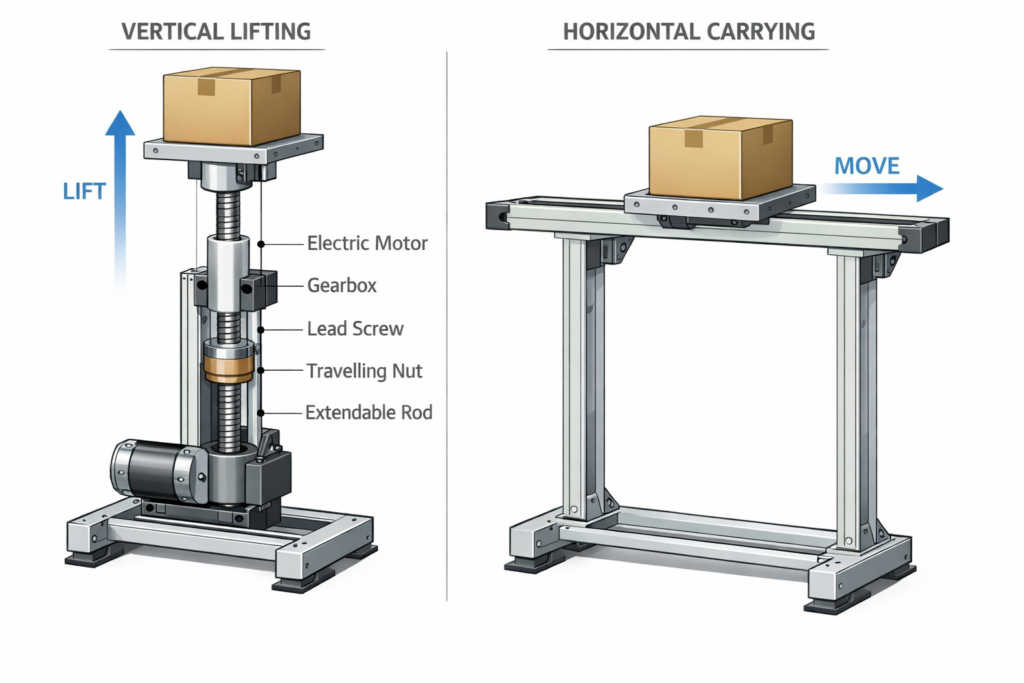
Linear actuator lift and carry loads by converting rotary motor motion into precise linear push/pull force through a screw mechanism, enabling controlled vertical, horizontal, or angled movement. By selecting the right force, stroke, speed, and control (12V/24V DC with polarity reversal), they integrate seamlessly into lifting structures like scissor lifts or pillars for safe, repeatable material handling.
Key Aspects
- Force & Load: Actuator force must exceed total load with a safety factor
- Stroke Length: Covers full motion range
- Speed: Fast for automation, slower for safety
- Alignment: Prevents noise and premature wear
- Safety: Built-in limit switches prevent over-travel
Usage
- Lifting: Scissor lifts, patient lifts, adjustable tables
- Carrying/Moving: Linear slides, robotic arms, conveyors
- Heavy/Wide Loads: Use synchronized actuators for balanced lifting
Key Application Areas
- Industrial material handling
- Medical and rehabilitation equipment
- Automation and robotics
- Warehousing and logistics
Required Components
- Electric linear actuator (12V or 24V DC)
- Power supply
- Mounting brackets (fixed & moving ends)
- Control device (switch, rocker, or controller)
- Structural frame (steel/aluminum)
- Safety limit switches (built-in or external)
Steps to Follow
- Design & Selection
- Calculate load capacity (include safety factor)
- Choose stroke length and speed
- Installation
- Secure mounting on both ends
- Ensure perfect alignment
- Use a rigid support structure
- Control Mechanism
- Connect DC power
- Reverse polarity to change direction
- Add switches/controllers and limit protection
Checklist for You
- Load + safety factor calculated
- Correct stroke length selected
- Speed matched to application
- Rigid mounting and alignment verified
- Limit switches tested
- Power and controls validated
Examples
- A scissor lift using dual synchronized actuators for stable vertical lifting
- An automated conveyor pusher moving boxes horizontally
- A robotic arm using actuators for precise pick-and-place motion
Key Features and Technology
- Lead/ball screw drive for precision
- DC motor with polarity-based direction control
- Integrated limit switches
- Options for synchronization and feedback
Advantages and Disadvantages
Advantages
- Precise, repeatable motion
- Clean, electric operation
- Easy integration with automation
Disadvantages
- Limited speed vs. hydraulics for very heavy loads
- Requires proper alignment and selection
Comparison Table
| Aspect | Linear Actuator | Hydraulic System |
|---|---|---|
| Precision | High | Moderate |
| Clean Operation | Yes | No (fluid) |
| Control | Simple DC control | Valves & pumps |
| Maintenance | Low | Higher |
| Heavy Loads | Medium–High (with sync) | Very High |
FAQs
1. How to lift and carry heavy loads using a linear actuator in industrial settings?
Select an actuator with force exceeding the load plus safety factor, use rigid mounting, and apply synchronized actuators for balanced lifting.
2. How to design a small lifting mechanism using linear actuators?
Calculate load and stroke, choose a suitable speed, mount securely with alignment, and control using a simple DC switch or controller.
3. Best linear actuators available in India for lifting and carrying applications.
Look for industrial-grade electric linear actuators with certified load ratings, limit switches, and local service support.
4. Components needed for an automated carrying device with linear motion.
Actuator, power supply, controller/switch, mounting brackets, structural frame, and safety limits.
5. Where to buy reliable linear actuators for material handling in India?
Purchase from established industrial automation suppliers or authorized distributors offering warranty and after-sales support.
6. Calculating the force required for a linear actuator to lift heavy items.
Force ≥ (Load × gravity) ÷ mechanical advantage, then add a safety factor (typically 25–50%).
7. Top manufacturers of linear actuators for lifting and carrying systems.
Choose manufacturers known for industrial reliability, load testing, and synchronization solutions.
8. Best types of linear actuators for outdoor load handling.
IP-rated actuators with corrosion-resistant materials and sealed housings.
9. Step-by-step guide to design a lift and carry mechanism with a linear actuator.
Define load → select force/stroke/speed → design structure → mount and align → add controls and safety → test.
10. Suppliers of electric linear actuators for material movement in India.
Industrial automation suppliers and OEM distributors specializing in material handling solutions.