
Integrating a projector into a modern media room, classroom, or planetarium often requires more than simply mounting it on the ceiling. Many users want a clean, hidden setup where the projector smoothly descends when needed and retracts when not in use. This is where a linear actuator powered projector lift becomes the perfect solution.
In this blog, we’ll explore how actuator-driven projector lifts work and walk through the key design considerations—including DIY tips, actuator control methods, and real-world applications.
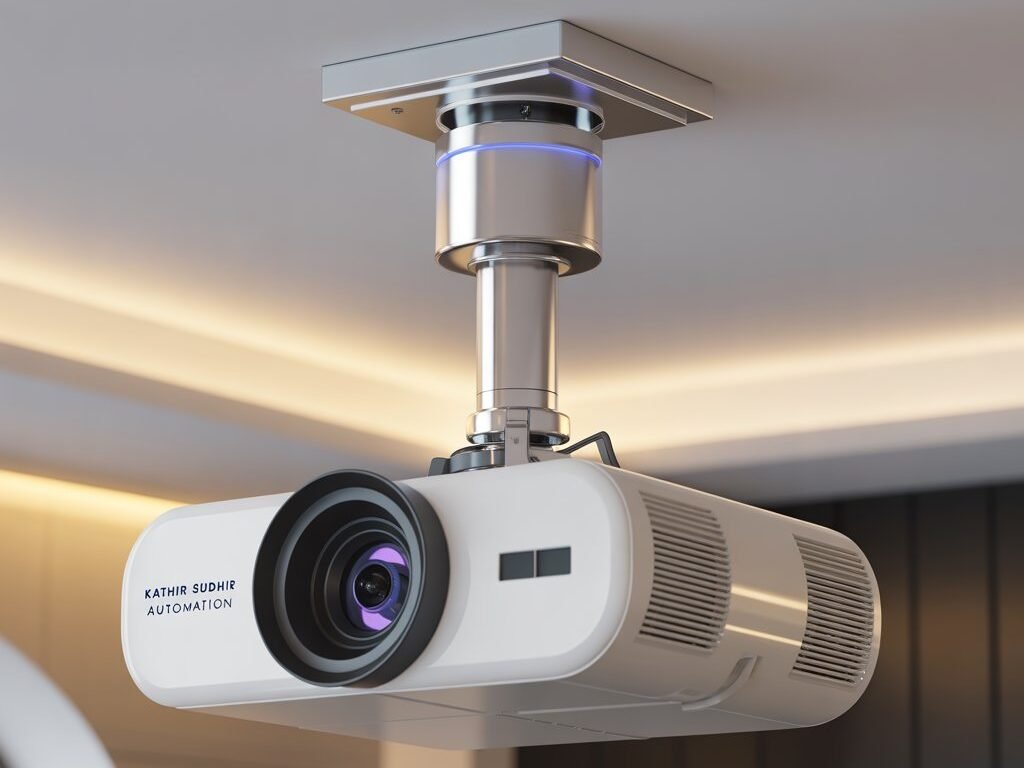
Comparing Projectors and TVs
Before building a lift system, it’s helpful to understand when a projector is the better choice.
- Screen Size: Projectors can easily produce massive images (100–150 inches or more) without the cost spike that large TVs bring.
- Space Efficiency: Because the projector can be hidden in the ceiling, it frees up wall space and reduces visual clutter.
- Cinematic Feel: Projectors create a more immersive, film-like viewing experience.
TVs, on the other hand, win when:
- You need bright, daytime viewing.
- You want a simple plug-and-play device.
- You don’t have a dark environment.
Projectors vs. TVs
Here’s a quick comparison to help you decide if designing a motorized lift is worth the effort:
| Feature | Projector | TV |
|---|---|---|
| Screen Size | Huge (100”+) | Limited by cost |
| Placement Flexibility | High | Moderate |
| Ambient Light Handling | Weaker | Strong |
| Immersion | Excellent | Good |
| Installation Complexity | Higher (especially with a lift) | Low |
If sleek aesthetics and large displays matter most, a projector—with a hidden lift—wins.
Concealing Your Display Unit
One of the biggest benefits of a motorized projector lift is concealment. When retracted into the ceiling cavity, your room looks cleaner and more minimalist.
Common concealment options include:
- A hinged ceiling panel that closes flush
- A recessed box with a trim kit
- A false ceiling or soffit to hide the mechanism
- Acoustic fabric panels that disguise the lift
Using a linear actuator allows precise, smooth lifting motion with minimal noise, making concealment nearly invisible and unobtrusive.
Building a DIY Projector Lift
Creating your own lift system is very achievable with the right components. A basic DIY projector lift includes:
- Linear Actuator – Provides the vertical motion.
- Guide Rails or Scissor Arms – Keep the projector platform stable.
- Projector Platform – The tray or mount that holds the projector.
- Ceiling Enclosure or Frame – The structure that houses the lift.
- Control System – A switch, remote, or smart-home integration to operate the actuator.
Key construction tips:
- Use lightweight materials like aluminum or plywood for the platform.
- Ensure adequate ventilation for projector cooling.
- Add stops or limit switches to prevent overtravel.
- Test weight balance before full installation.
Deciding the Ceiling Configuration
Your ceiling type determines how easy installation will be:
- Drop Ceilings provide the simplest installation because you can hide the lift above the tiles.
- Drywall Ceilings require cutting an access area and building a support frame.
- Beam or Joist Ceilings may allow direct mounting but need accurate load distribution.
Consider:
- The available cavity depth
- Cable routing for power and HDMI
- Weight-bearing capacity
- The size of the projector plus the lift mechanism
Choosing Your Linear Actuator
The linear actuator is the heart of the lift. Choose carefully based on:
1. Stroke Length of Linear Actuator
This is how far the actuator extends.
Typical projector lifts need 6–18 inches depending on ceiling depth.
2. Load Capacity
Add the weight of the projector, platform, brackets, and safety margins.
Many systems use 150–300 lb capacity actuators for stability.
3. Speed
Faster isn’t always better—smooth, controlled operation looks more professional.
Aim for 0.5–1 inch/second.
4. Noise Level
Look for <50 dB for home theater applications.
5. Power Type
Most systems use 12V or 24V DC actuator.
Maintaining Projector Stability
Regardless of actuator strength, stability is crucial for image alignment.
Use these methods to maintain a stable platform:
- Dual actuator systems for even lifting
- Guiding rails to prevent swaying
- Crossbars and rigid frames for torsional stability
- Vibration dampening pads to reduce motion impact
- Tight cable management to avoid snagging during movement
A wobbly projector will ruin image clarity and alignment, so take time to perfect the lift’s structural rigidity.
Controlling Your Linear Actuator
You can control the projector lift in several ways:
Wired Rocker Switch
Simple and reliable—good for DIY starters.
Wireless Remote
Allows convenient up/down control from anywhere in the room.
Smart Home Integration
Using a controller, you can sync the lift with:
- Projector power on/off
- Home theater presets
- Voice assistants (Alexa, Google Assistant)
Limit Switches
Help ensure the lift stops precisely at the top and bottom to protect the actuator and projector.
Planetarium Projector Lift Project
Linear actuators are increasingly popular in planetarium and dome theater installations. In these setups, projectors often need to:
- Move into position when shows begin
- Retract for maintenance or multi-use spaces
- Tilt or adjust angles for dome projection
A custom actuator-driven lift can position planetarium projectors with high precision, ensuring exact alignment for immersive 360° visuals. These lifts sometimes use high-torque actuators, multi-axis mechanisms, and automated show-sync control to handle the unique projection demands of dome environments.
In Summary
A linear-actuator-driven projector lift is an elegant and practical solution for anyone seeking a clean, hidden, professional projector setup. By choosing the right actuator, planning the ceiling configuration, and building a stable lift mechanism, you can create a system that delivers smooth and reliable performance for years.
Whether you’re outfitting a home theatre, classroom, conference room, or even a planetarium, actuator-powered lifts offer a flexible and modern approach to display technology—combining functionality with a sleek aesthetic. if you want to buy a Linear Actuator, please visit our Shopping Website: Linearactuator.shop.
It provides a diverse array of entertainment choices designed for different preferences.
A clean, hidden projector setup is definitely appealing – I hadn’t considered using a linear actuator before reading this.
Absolutely! A linear actuator makes the whole setup look clean and professional while keeping the projector safely hidden when not in use. Plus, the smooth up-and-down motion adds a premium feel to any home theater. Glad the idea helped you!