
Vehicle safety depends heavily on the braking system. However, traditional brakes rely on hydraulic parts. These parts can fail. Therefore, modern vehicles now use powerful electric actuators for braking. In particular, electric actuator play a vital role when the main braking system fails. As a result, they help stop the vehicle safely.
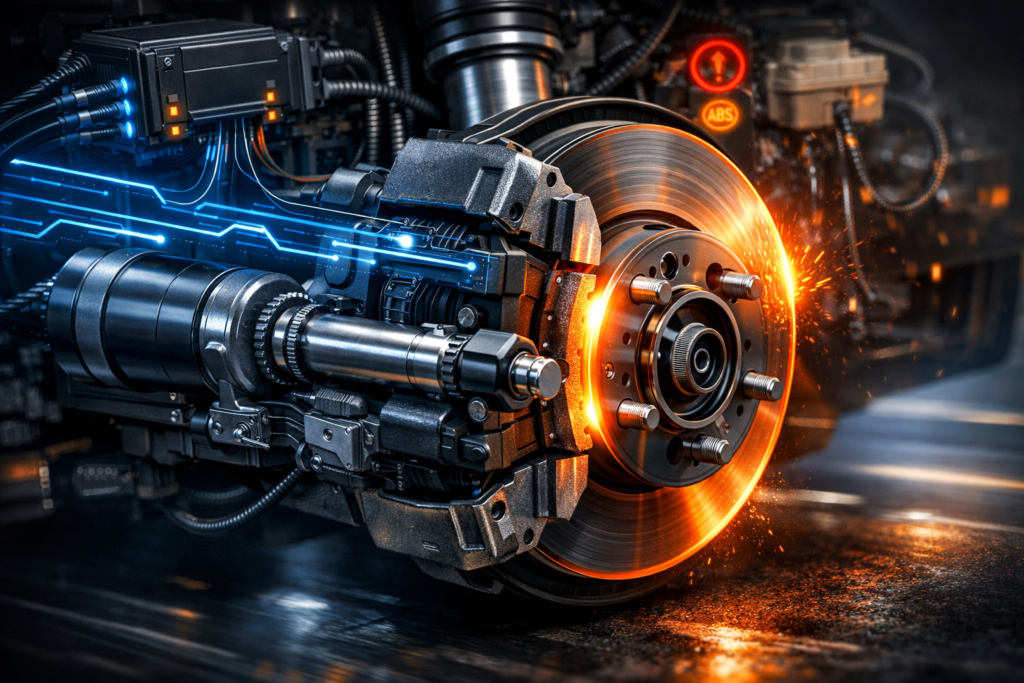
How an Electric Actuator Controls Vehicle Braking
First, when the driver presses the brake pedal, sensors detect the action. These sensors measure how fast and how hard the pedal is pressed. Next, the sensors send signals to the Electronic Control Unit (ECU). The ECU acts as the brain of the braking system. Then, the ECU calculates the exact braking force needed for each wheel. At the same time, it checks speed, load, and road conditions. After that, the ECU sends a command to the electric linear actuator.
How the Linear Actuator Applies Braking Force
Now, the electric linear actuator starts working. It uses a motor to convert electrical energy into linear motion. As the motor rotates, gears move the actuator forward. Consequently, this motion pushes the brake pads against the brake disc. Because of this friction, the vehicle slows down. Finally, the vehicle comes to a complete stop.
What Happens If the Braking System Fails?
In some cases, hydraulic braking systems can fail. For example, brake fluid may leak or pressure may drop. However, electric linear actuators do not rely on brake fluid. Therefore, they can still apply braking force. Moreover, each wheel has its own actuator. As a result, the system continues to work even if one part fails. In addition, backup power sources can activate emergency braking. Thus, electric linear actuators improve overall vehicle safety.
Key Benefits of Using Electric Actuators in Braking
Firstly, electric actuators offer faster response time. There is no delay caused by fluid movement. Secondly, they improve safety and control. Each wheel receives the right amount of force. Moreover, maintenance becomes easier. There is no brake fluid to replace. Additionally, the system is more efficient. Energy loss is reduced. Most importantly, electric linear actuators support brake-by-wire technology.
Common Applications of Electric Actuator Braking
Today, electric actuator braking is widely used in:
- Electric vehicles (EVs)
- Autonomous vehicles
- Commercial vehicles
- Emergency braking systems
- Advanced driver assistance systems (ADAS)
Therefore, this technology is essential for modern mobility.
About Electric Actuators in Vehicle Safety
Electric actuators are changing the way vehicles stop. They make braking smarter and safer. As vehicles become more advanced, this technology becomes more important. In conclusion, electric linear actuators ensure reliable braking, even during system failure.