Actuators are crucial in modern technology, but many people may not understand Actuators meaning and function. An actuator is a device that converts energy into motion or force, and depending on its design, it can produce linear, rotary, or oscillatory motion. These devices can be found in everyday devices like phones and cars, as well as in heavy machinery and industrial robots.
For instance, car engines use actuators to regulate fuel injection, throttle, and exhaust gas recirculation valves. In industrial settings, actuators control valves, pumps, and other mechanical systems. There are various types of actuators, each with unique properties and applications. We delve deep into know about Actuators Meaning.
Types
Hydraulic actuators use pressurized fluids, while pneumatic actuators rely on compressed air. Electric actuators operate on electricity, while piezoelectric actuators work by using the piezoelectric effect. Hydraulic actuators are commonly used in heavy machinery and construction equipment, while pneumatic actuators are ideal for robotics and automation. Electric actuators are preferred for applications requiring precise motion control and speed, such as medical devices and robotics. Piezoelectric actuators are used in small-scale applications, such as nanotechnology and semiconductor processing.
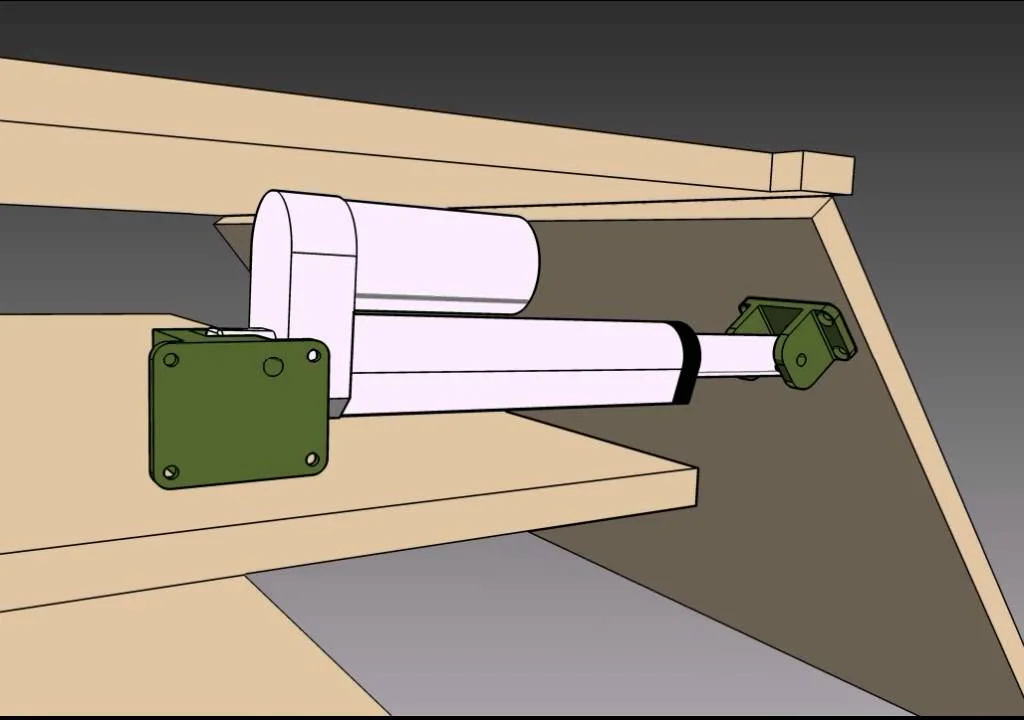
Actuators are critical components in several industries, including aerospace, automotive, chemical, construction, and manufacturing. They enable precise control and movement, ensuring the efficient operation of many mechanical systems. Research and development of new and innovative actuators could revolutionize several industries.
Conclusion
In conclusion, understanding the meaning and function of actuators is vital for anyone interested in engineering, mechanics, or technology. Actuators are vital components of modern technology, with a wide range of applications across various industries. To learn more about actuators and their applications, visit https://electricactuator.in/.
To summarize, understanding the importance of actuators in modern technology is crucial. These devices convert energy into motion or force, and they are found in various applications, from everyday devices to heavy machinery and industrial robots. Actuators are used in several industries, and they enable precise control and movement, ensuring the efficient operation of many mechanical systems. Finally, ongoing research and development of new and innovative actuators could revolutionize several industries. For customized Actuators kindly visit this page.
Read More Articles:

Linear Actuator Applications in Marketing Trailers
Transform Your Marketing Trailer with Powerful Linear Actuators: Smart Motion for Mobile Showrooms A Linear Actuator Application by KathirSudhir Automation Imagine a marketing trailer arriving at a busy location.A few minutes ago, it looked like an ordinary enclosed trailer. Then, with the push of a button, panels lift, displays extend, a canopy rises, and the…

Smoke Detection System for Smart Fire Safety
A Smoke Detection System is an important fire safety solution designed to detect smoke at an early stage and provide immediate alerts. Modern smoke detection systems can continuously monitor protected areas and notify users through alarm outputs, SMS and email alerts. For industrial facilities, laboratories, clean rooms, HVAC systems, data centers and commercial buildings, a…

High Voltage Cable – Overheat Detection System with Temperature Indicator Controller
High Voltage Cable Overheat Detection is important for monitoring cable temperature and identifying abnormal heating before it causes cable damage or electrical failure. A high voltage cable overheat detection system uses temperature sensors and a temperature indicator controller to continuously monitor cable temperature and provide an alarm when the temperature exceeds a predefined limit. What…