
Introduction
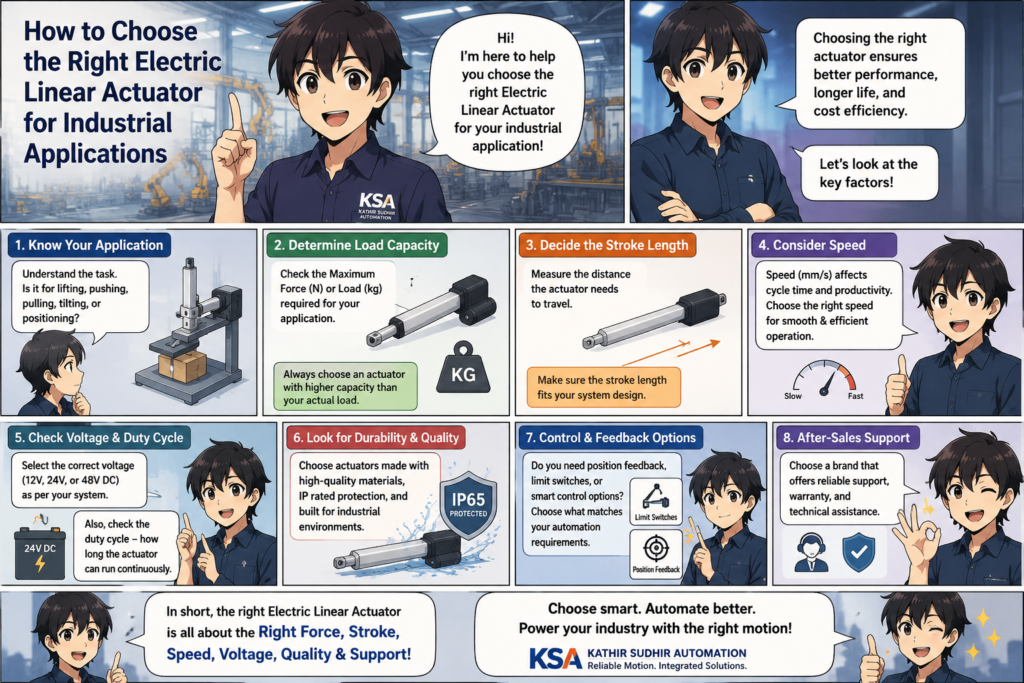
Choosing the right electric linear actuator is critical for achieving reliable and efficient machine performance. An actuator that is too small may fail under load. On the other hand, an oversized actuator can increase costs unnecessarily. Therefore, selecting the correct actuator requires careful evaluation of several factors. These include load capacity, stroke length, speed, voltage, duty cycle, and environmental conditions. In this guide, you will learn how to choose the best electric linear actuator for your industrial application.
What Is an Electric Linear Actuator?
An electric linear actuator converts the rotary motion of an electric motor into precise linear movement. As a result, it can lift, push, pull, or position loads with high accuracy. Unlike hydraulic and pneumatic systems, electric actuators operate without oil or compressed air. Therefore, they require less maintenance and provide cleaner operation. In addition, they integrate easily with PLCs and automation systems.
Factors to Consider
1. Load Capacity
First, determine the maximum force your application requires. Next, include a safety margin to account for unexpected loads. This approach helps improve reliability and extends the actuator’s service life.
2. Stroke Length
After calculating the required movement, choose the shortest stroke length that meets your application. A longer stroke increases both cost and installation space. Therefore, selecting the correct stroke length improves efficiency.
3. Speed
Speed is another important factor. Generally, actuators with higher speeds produce lower force. Therefore, you should balance speed and load capacity based on your application requirements.
4. Voltage
Most electric linear actuators are available in 12V DC, 24V DC, and 230V AC versions. However, 24V DC is the preferred choice for industrial automation because it integrates easily with PLC control systems.
5. Duty Cycle
The duty cycle indicates how long an actuator can operate before it requires cooling. Therefore, applications with continuous or frequent movement should use actuators with a higher duty cycle. As a result, the actuator operates more reliably and lasts longer.
6. Environmental Conditions
Before selecting an actuator, consider the operating environment. For example, outdoor applications often involve dust, moisture, and temperature changes. Therefore, choosing an actuator with an IP65 or higher protection rating helps ensure reliable operation.
7. Mounting Style
Proper mounting is equally important. Incorrect installation can create side loads and reduce actuator life. Therefore, select a mounting style that allows smooth and unrestricted movement throughout the stroke.
Common Industrial Applications
Electric linear actuators are used in many industries. For example, they are commonly installed in packaging machines, conveyor systems, material handling equipment, hospital beds, solar tracking systems, water treatment plants, agricultural machinery, and industrial automation equipment. As a result, they provide accurate, reliable, and repeatable motion across a wide range of applications.
Common Mistakes to Avoid
Although actuator selection seems straightforward, many mistakes can affect performance. For example, choosing the wrong load capacity can reduce reliability. Similarly, ignoring the duty cycle can lead to overheating. In addition, selecting an excessive stroke length increases costs. Finally, failing to consider environmental protection or controller compatibility can reduce system performance.
Why Choose Kathir Sudhir Automation?
Kathir Sudhir Automation offers electric linear actuators with multiple load capacities, stroke lengths, speed options, and customization for industrial applications. In addition, our engineering team helps customers select the most suitable actuator based on their machine requirements. As a result, customers receive reliable and efficient automation solutions.
Conclusion
Selecting the right electric linear actuator improves machine efficiency, reduces maintenance, and increases equipment life. Therefore, evaluate load capacity, stroke length, speed, voltage, duty cycle, and environmental conditions before making your decision. By following these guidelines, you can choose an actuator that delivers reliable performance for years to come.