
Modern telecom, defense, surveillance, and emergency communication systems demand fast deployment and precise positioning. High-precision telephonic masts with integrated electric actuator solve this challenge by delivering automated extension, controlled movement, and millimeter-level accuracy.
These advanced mast systems improve antenna stability, reduce manual labor, support real-time adjustments, and help telecom operators maintain stronger signal quality for 5G and mission-critical communication networks.
Overview of High-Precision Telephonic Masts with Integrated Electric Actuator
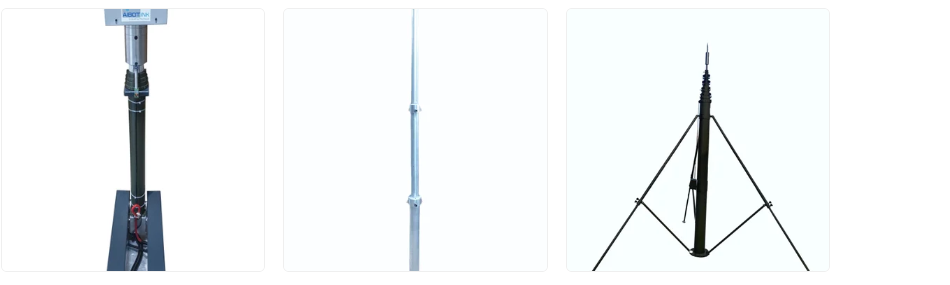
High-precision telephonic masts are engineered telescopic systems designed for controlled height extension and positioning. Integrated electric actuators automate mast movement and eliminate dependency on manual winches, pneumatic systems, or hydraulic controls.
These systems are widely used in:
- Telecom tower installations
- 5G antenna positioning
- Defense communication vehicles
- Tactical surveillance systems
- Emergency response communication units
- Satellite tracking stations
- Mobile edge computing platforms
Key Aspects
| Feature | Description |
|---|---|
| Precision Control | Sub-millimeter positioning accuracy |
| Automation | Push-button extension and retraction |
| Integrated Actuation | Embedded actuator mechanism inside mast sections |
| Communication Compatibility | CAN bus and LIN bus integration |
| Environmental Protection | IP66/IP67 sealing |
| Smart Monitoring | Real-time load and health monitoring |
| Deployment Speed | Faster setup compared to manual systems |
Internal Links
- Electric Linear Actuators
- Industrial Electric Actuator Solutions
- Linear Actuator Applications
- Automation Actuator Systems
- Industrial Motion Control Solutions
The Engineering of Integrated Actuation
High-precision telephonic masts have evolved significantly, moving away from manual winch or pneumatic systems toward electromechanical integration. By embedding electric actuators directly into telescoping joints, these masts achieve the millimeter-level accuracy required for modern 5G beamforming, satellite tracking, and tactical surveillance.
In advanced mast systems, the electric actuator is no longer an external attachment. It is integrated into the inner structure of the telescopic sections.
This nested architecture provides:
- Compact retracted height
- Improved protection against environmental wear
- Better load distribution
- Increased operational stability
- Reduced maintenance exposure
- Enhanced military-grade durability
Lead Screw (Spindle) Drive
Lead screw actuators are considered the gold standard for high-load stability.
Benefits
- Prevents back-driving during power loss
- High load-holding capability
- Excellent positioning precision
- Longer service life
- Stable movement under vibration
Belt or Cable-Driven Actuators
These systems are designed for rapid deployment applications.
Best For
- Mobile communication vehicles
- Quick deployment telecom systems
- Emergency response applications
- Temporary tactical towers
Multi-Actuator Synchronization
Modern high-end systems may use 3 to 6 synchronized actuators per mast joint.
Why It Matters
- Redundancy improves safety
- Continued operation during partial failure
- Better weight balancing
- Improved structural reliability
- Safer mast retraction
How High-Precision Telephonic Masts Work
Integrated electric actuators convert electrical energy into controlled linear movement.
Step-by-Step Working Process
- Power is supplied to the actuator motor.
- The motor rotates the lead screw or drive mechanism.
- Telescopic mast sections extend upward.
- Sensors monitor height, tilt, and load conditions.
- Control systems automatically adjust positioning.
- The mast locks into the required position.
- Real-time feedback is sent through CAN bus or LIN bus systems.
Operations and Functions
| Function | Purpose |
|---|---|
| Extension | Raises antenna or surveillance equipment |
| Retraction | Safely lowers mast sections |
| Tilt Adjustment | Improves directional signal performance |
| Pan Control | Supports tracking and beam alignment |
| Load Monitoring | Prevents overload conditions |
| Wind Compensation | Maintains stability during harsh weather |
| Position Feedback | Provides accurate operational data |
Advantages of Electric Actuator vs Traditional Systems
The telecom industry is rapidly shifting toward electric actuator systems due to lower maintenance, improved automation, and smart control capabilities.
| Feature | Electric Actuators | Pneumatic Masts |
|---|---|---|
| Precision | Excellent sub-millimeter accuracy | Limited mid-stroke accuracy |
| Maintenance | Minimal maintenance | Frequent compressor maintenance |
| Noise | Quiet operation | Noisy air exhaust |
| Energy Efficiency | High efficiency | Energy losses in air compression |
| Environmental Safety | No hydraulic leaks | Air pressure dependency |
| Smart Integration | CAN bus and LIN bus compatible | Mostly manual controls |
| Deployment | Fast automated deployment | Slower setup |
Advantages
- Accurate antenna positioning
- Reduced manpower requirements
- Better telecom signal quality
- Faster deployment time
- Lower operational cost
- Remote operation support
- Improved safety during operation
- High repeatability
- Better resistance to harsh environments
Disadvantages
- Higher initial investment
- Requires proper electrical integration
- Sensor calibration may be required periodically
- Advanced systems need skilled installation
Key Features and Technology Trends for 2026
The industry is rapidly evolving to support 5G infrastructure, IoT communication, and autonomous systems.
Integrated BUS Protocols
Modern actuator systems support:
- CAN bus communication
- LIN bus communication
- Real-time health monitoring
- Position tracking
- Fault diagnostics
Dynamic Load Balancing
Integrated sensors monitor:
- Wind sway
- Structural vibration
- Uneven loading
- Height stability
The actuator automatically performs micro-adjustments to maintain line-of-sight alignment.
Autonomous Vehicle Integration
Lightweight carbon-fiber telephonic masts are now integrated into:
- Unmanned Ground Vehicles (UGVs)
- Mobile communication vans
- Defense reconnaissance systems
- Remote monitoring platforms
AI-Enabled Predictive Maintenance
Advanced controllers analyze actuator behavior and predict:
- Wear conditions
- Motor overheating
- Misalignment issues
- Failure risks
Key Application Areas and Reasons
Telecom Industry
Uses
- 5G antenna positioning
- Signal optimization
- Rural network expansion
- Tower automation
Reasons
- Better network coverage
- Improved beamforming accuracy
- Reduced downtime
Defense and Military
Uses
- Tactical surveillance
- Radar systems
- Secure communication systems
Reasons
- Compact deployment
- Fast setup in remote areas
- High durability
Emergency Response Systems
Uses
- Disaster communication networks
- Temporary communication towers
- Rescue operation monitoring
Reasons
- Rapid deployment
- Reliable communication support
- Portable integration
Broadcasting and Media
Uses
- Mobile broadcasting systems
- Event communication towers
Reasons
- Temporary setup flexibility
- Adjustable mast height
Required Components
A complete precision mast solution generally includes:
| Component | Function |
|---|---|
| Electric Linear Actuator | Provides controlled movement |
| Telescopic Mast Sections | Extends communication height |
| Servo/DC Motor | Drives the actuator mechanism |
| Encoder Sensors | Position accuracy monitoring |
| CAN/LIN Controller | Communication and diagnostics |
| Control Panel | User operation interface |
| Power Supply Unit | Electrical power management |
| Mounting Brackets | Structural support |
| Weatherproof Enclosure | Environmental protection |
Key Benefits and Specifications
Common Technical Specifications
| Specification | Typical Range |
|---|---|
| Ingress Protection | IP66 or IP67 |
| Load Capacity | 10 kg to 200 kg |
| Extension Height | 30 mm to 1200 mm |
| Voltage Options | 12V, 24V DC |
| Operating Temperature | -15°C to +45°C |
| Position Accuracy | Sub-millimeter |
| Communication Protocol | CAN bus / LIN bus |
| Deployment Time | 2 minutes ON / 18 minutes OFF |
Key Benefits
- Precise antenna alignment
- Faster deployment process
- Improved telecom network efficiency
- Enhanced operational safety
- Reduced maintenance cost
- Longer equipment lifespan
- Remote monitoring capability
Installation Steps to Follow
Step 1: Site Assessment
Check:
- Ground stability
- Wind conditions
- Power availability
- Network coverage requirements
Step 2: Structural Mounting
- Install mast base securely
- Verify alignment
- Tighten structural supports
Step 3: Electrical Integration
- Connect actuator wiring
- Install controllers and sensors
- Configure power systems
Step 4: Calibration
- Test extension accuracy
- Configure position feedback
- Validate communication protocols
Step 5: Functional Testing
- Perform full extension cycles
- Test emergency stop functions
- Verify load stability
Installation Checklist for You
Mechanical Checklist
- Mast base aligned properly
- Fasteners tightened
- Structural balance verified
- Load capacity checked
Electrical Checklist
- Voltage compatibility confirmed
- Wiring secured
- Controller communication tested
- Backup power checked
Safety Checklist
- Emergency stop operational
- Wind protection enabled
- Grounding completed
- IP protection verified
Key Prevention Techniques
Preventive maintenance improves reliability and reduces downtime.
Recommended Techniques
- Inspect actuator movement monthly
- Clean telescopic sections regularly
- Check sensor calibration periodically
- Verify cable integrity
- Lubricate moving parts if recommended
- Test emergency stop systems
- Monitor vibration levels
Compliance and Best Practices
Best Practices
- Use certified actuators
- Follow telecom tower safety standards
- Install surge protection systems
- Maintain proper grounding
- Use weatherproof connectors
- Perform routine inspection schedules
Compliance Standards
| Standard | Purpose |
|---|---|
| IP66/IP67 | Environmental sealing |
| ISO Standards | Quality management |
| CE Certification | Product compliance |
| RoHS Compliance | Environmental safety |
| Telecom Safety Standards | Operational reliability |
Example Use Cases
Example 1: 5G Rural Deployment
A telecom operator installed automated telephonic masts in rural India to improve 5G coverage. Integrated electric actuators reduced manual setup time by 60% and improved signal alignment accuracy.
Example 2: Defense Surveillance Vehicle
A military surveillance unit used carbon-fiber telephonic masts with synchronized actuators for rapid field communication deployment.
Example 3: Emergency Communication System
Disaster response teams deployed mobile mast systems with automatic positioning to restore communication networks after floods.
Pro Tip
Choose electric actuators with encoder feedback and CAN bus integration. This improves automation accuracy, enables predictive maintenance, and supports future telecom upgrades.
Comparison Table for Buyers
| Parameter | Basic Mast System | High-Precision Integrated Mast |
|---|---|---|
| Automation Level | Semi-manual | Fully automated |
| Position Accuracy | Moderate | High precision |
| Maintenance | Frequent | Low maintenance |
| Deployment Speed | Slow | Fast |
| Smart Monitoring | Limited | Advanced monitoring |
| Communication Support | Minimal | CAN/LIN compatible |
| Reliability | Standard | Industrial-grade |
FAQs
1. Who is the best manufacturers of high-precision telephonic masts with integrated electric actuator in India?
Several Indian manufacturers provide industrial-grade electric actuator and mast automation solutions. Buyers should evaluate companies based on customization capability, telecom industry experience, IP protection ratings, load handling capacity, and after-sales support.
2. How does automated tilt and pan adjustment benefit 5G network performance?
Automated tilt and pan systems improve beamforming accuracy, optimize signal direction, reduce network dead zones, and maintain stable communication quality during environmental changes.
3. Where to buy high-precision telephonic masts with integrated electric actuator locally?
You can source these systems from industrial automation companies, telecom infrastructure suppliers, and electric actuator manufacturers that provide custom mast integration solutions.
4. Who is the suppliers of high-precision motorized mast systems for rural India?
Many telecom infrastructure and industrial automation providers supply motorized mast systems for rural deployment projects. Look for suppliers offering weatherproof and low-maintenance solutions.
5. Who is the top-rated suppliers of telephonic masts with electric actuator for precision use?
Top-rated suppliers generally provide precision actuator control, custom engineering support, smart monitoring systems, and reliable service support for telecom and defense sectors.
6. What are the best practices for installing electric actuator on existing telecom towers?
Best practices include structural analysis, proper grounding, actuator alignment, surge protection installation, accurate load balancing, and regular maintenance inspections.
7. What is the cost comparison of high-precision telephonic masts with built-in electric actuator?
Integrated precision mast systems cost more initially compared to manual systems, but they reduce maintenance expenses, labor costs, deployment time, and operational downtime over the long term.
8. How I request for proposal for scalable automated antenna positioning units?
An effective RFP should include load requirements, deployment height, environmental conditions, communication protocols, automation expectations, power specifications, and safety standards.
9. What is the technical specifications of telephonic masts with integrated electric actuator for telecom tower installations?
Typical specifications include IP66/IP67 protection, CAN bus integration, sub-millimeter positioning accuracy, 12V/24V operation, encoder feedback systems, and high load-bearing capacity.
10. Where can I get a detailed quote for a complete precision mast solution in Tamil Nadu?
You can contact industrial automation and electric actuator solution providers in Tamil Nadu that specialize in telecom infrastructure, customized actuator integration, and precision motion systems.
Conclusion
High-precision telephonic masts with integrated electric actuators are transforming telecom infrastructure, surveillance systems, and mission-critical communication platforms. These systems deliver accurate positioning, faster deployment, improved automation, and lower operational costs.
As 5G, IoT, and smart communication technologies continue to expand, demand for intelligent mast systems with advanced electric actuator integration will increase rapidly. Businesses investing in automated mast solutions gain better operational control, reduced maintenance requirements, and stronger long-term performance.
For reliable automation performance, choose a trusted electric actuator manufacturer with experience in precision motion control, telecom integration, and industrial-grade engineering solutions.